

Did you know? There are 13 UNESCO World Heritage Sites in the Netherlands. And you can visit 11 of them on our tours by bike and boat. It probably comes as no surprise that many Dutch UNESCO sites have to do with water management and flood protection – after all, the Dutch are world champions in this field.
Other places are on the World Heritage List because of their special and innovative architecture or their unique nature. Want to know more? Read our blog and get inspired!
Plan your trip
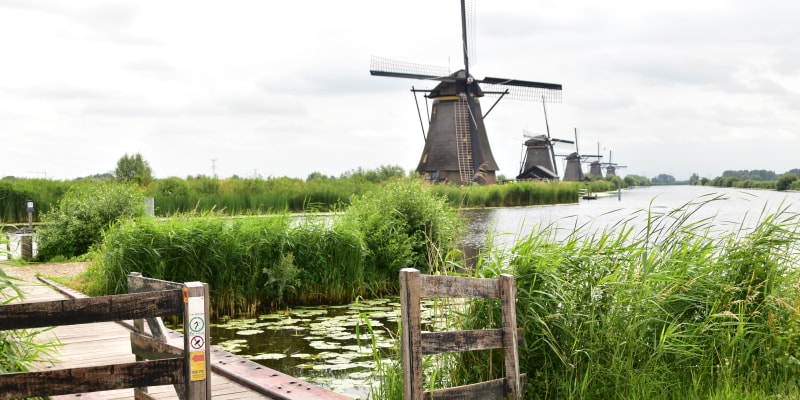
1. Kinderdijk
The “Mill Network at Kinderdijk-Elshout” is famous for its two picturesque rows of windmills, dating to the mid-1700s. It’s a great example of how the Dutch have centuries of experience in flood control because, besides being beautiful, that’s what these windmills did … and they still do! These windmills were built to help create “polders,” draining land to create more farmland, but in times of flood they can still be called into action to keep the land dry.
Kinderdijk is a highlight of the Amsterdam-Paris Tour the Southern Tour of Holland and the Amsterdam-Bruges tour!
2. Dutch Water Defence Lines
What do you do when your territory is very flat – often below sea level – and you need to defend it from invading armies? If you’re Dutch, you consider using water to your advantage! The Dutch Water Defence Lines were built to deliberately flood land in the case of invasion. It wouldn’t flood the polders very much – just to knee height – but that would be enough to stop soldiers on foot or horses. And it wouldn’t be deep enough for boats to cross. Brilliant! This UNESCO site is actually made up of many parts: forts, some of which you can still visit, but also things like sluices, dikes, canals and polders. It stretches from Amsterdam to Muiden to Biesbosch National Park; it’s 200 kilometers (124 miles) long and includes 102 forts and two castles.
Many of the elements of the Dutch Water Defence Lines are things you wouldn’t really notice: sluices, for example, dikes and canals. You’ll see them on many of our tours through the Netherlands: for example, on the 8-day Tulip Tour.
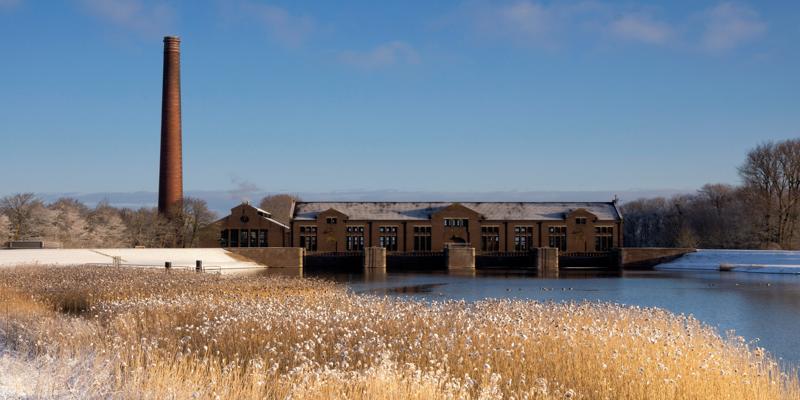
3. Woudagemaal Steam pumping station
Another UNESCO site related to Dutch expertise in water management is Ir. D.F. Woudagemaal, a steam-driven pumping station dating to 1920. This “masterpiece of the work of Dutch hydraulic engineers and architects” (UNESCO) is the largest and most powerful pumping station powered by steam ever built, and it still works today. When water levels get too high in Friesland, it pumps the excess into the Ijsselmeer. It’s also a great example in terms of its Amsterdam-school architecture, with its elegant brick work. You can visit its excellent interpretation center to learn all about Dutch water management through the centuries and you might be able to take a tour of the pumping station itself. In any case you can admire it from the outside.
Woudagemaal Steam Pumping Station is a stop on our Holland’s UNESCO treasures tour.
4. Schokland and its surroundings
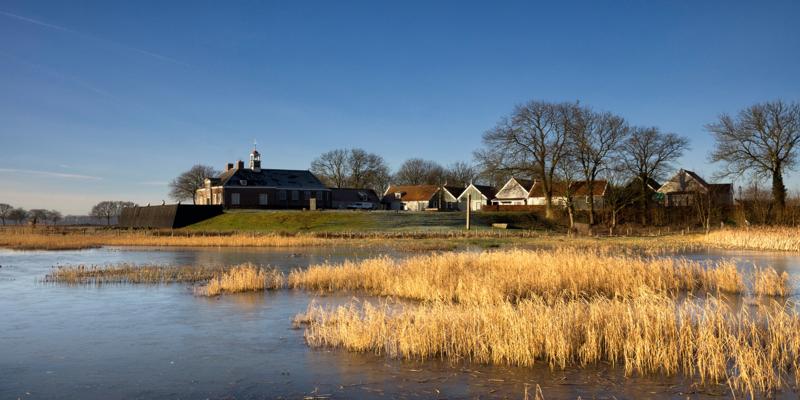
Schokland is as much a symbol as a specific place to see. It represents how people in this region have fought against the sea for millennia. Occupied since prehistoric times, it was a low peninsula, prone to flooding, that became an island in the 16th century. In the 19th century it had to be abandoned completely because of the sea’s encroachment. However, in the 20th century it was reclaimed from the sea again, part of the massive project that also created the Ijsselmeer and the new province of Flevoland – the Dutch don’t do things by halves! What you’ll see now is a peaceful agricultural landscape, but traces of prehistoric and more recent habitation are still there. Look for slight rises: hills called terps where the villages stood above the land that flooded so frequently.
On our Sail & Bike IJsselmeer and National Parks tour, you’ll cycle through the lovely polder that is the former island of Schokland.
5. Beemster Polder
Beemster Polder, north of Amsterdam, dates to the early 1600s, and it’s listed as a UNESCO site because it’s a great example of a classic polder. A polder is an area of land that was once covered by water but has been drained to create more farmland or pastureland. It’s laid out in neat squares with drainage canals around them, and you’ll see the typical tidy farmhouses of that period as well. It’s a wonderful place to cycle, and even the long avenues of trees you’ll ride between are mentioned in UNESCO’s listing.
You can experience the Beemster Polder on the second day of our Sail & Bike IJsselmeer and National Parks tour, riding through a landscape that lies 3.5 meters (11.5 feet) below sea level. It’s also a highlight of our Holland’s UNESCO Treasures tour, where you’ll delve deeper into the history and design of this extraordinary example of Dutch vision and engineering.
Most of the rest of the UNESCO sites you can see on Boat Bike Tours are about history and architecture, so let’s have a look at them in chronological order.
6. Frontiers of the Roman Empire – The Lower Germanic Limes
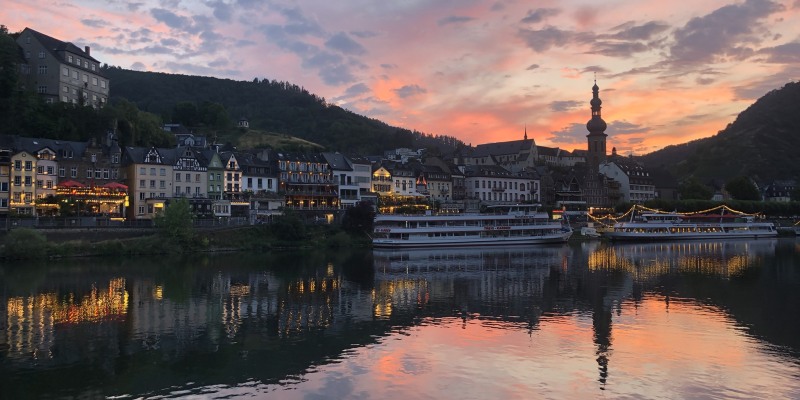
When the Roman Empire expanded northward, there was a point when they could no longer expand. Instead, they built a border so they could protect the empire from the Germanic tribes who lived north of that border line. It extended for 400 km (249 mi) from Lower Germany all the way up to the North Sea. Along this border, mostly still buried underground, are remnants of that border dating from the 1st century BC to the 5th century AD.
There are forts, watchtowers and military bases, as well as civilian buildings. They didn’t build a border wall, but rather used these military installations to keep an eye on the borderlands.
The best tour to see some of this UNESCO site is the Amsterdam-Cochem tour. In Germany, the tour includes Cologne, Bonne and Remagan, all of them founded by the Romans and containing elements of this very spread-out UNESCO site.
7. The Amsterdam Canals
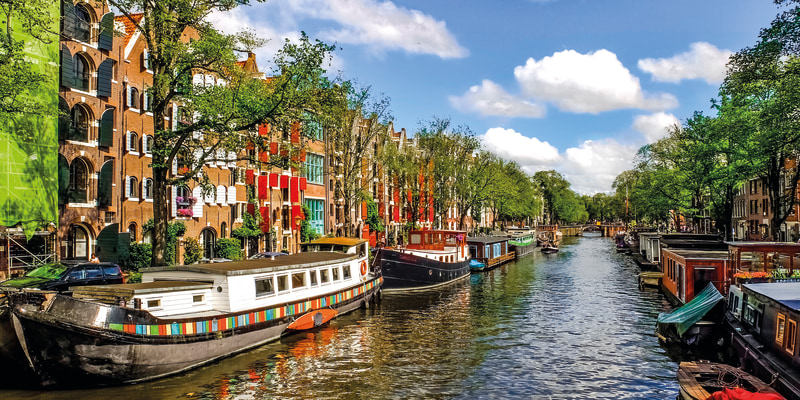
Officially called “Seventeenth-Century Canal Ring Area of Amsterdam inside the Singelgracht,” almost all our tours start or end in Amsterdam. Make sure to plan in a few extra days to explore this magnificent city! Amsterdam was very much a planned city, dating to the end of the 16th century and into the 17th century. The canals were built in concentric circles – with connecting canals between them – and the middle-class citizens, flush with money from worldwide trade – bought narrow strips of land along them to build the beautiful gabled brick houses and warehouses we see today. There are almost 4000 historical buildings within the UNESCO site’s boundaries!
Since most of our tours in the Netherlands begin and/or end in Amsterdam, we highly recommend extending your stay. Spend an extra night (or more!) and give yourself time to soak in the city’s rich history, charming neighborhoods, and world-class museums.
8. Eise Eisinga Planetarium
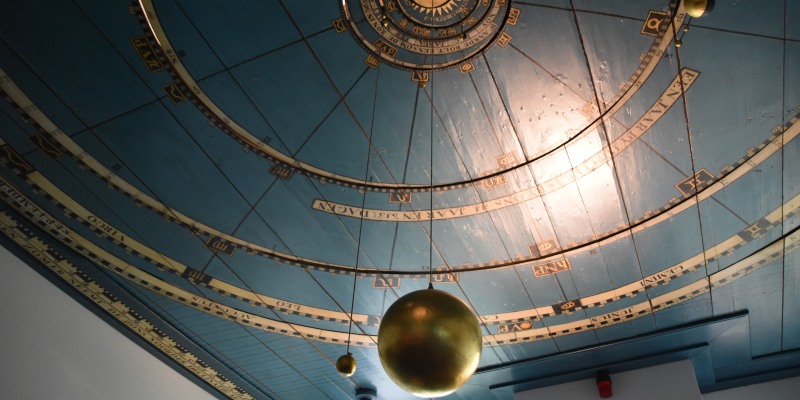
This is our brand-new UNESCO site, just added to the list in September 2023. But from the outside, you’d never guess that there was anything special about this house in the lovely town of Franeker in Friesland. Yet it contains something quite wondrous: the oldest still-working model of the solar system in the world! It dates to the 1700s, built by an ordinary wool comber. It all started in 1774 when, one day, there was an unusual conjunction of several planets and the moon in the sky. A preacher predicted that the force of the alignment might push the earth out of its orbit and into the sun: the End of Days. Eisa Eisinga had been studying astronomy enough to know that this was nonsense, and spent seven years building a model of the solar system in his living room to prove it. It’s still there, and it still works!
You can see the Eisinga Planetarium if you take the Discover Friesland tour, the Holland’s UNESCO treasures tour or the Sail & Bike Wadden Sea tour, because on all of those, you’ll pass through the cute town of Franeker on your bike route.
9. Rietveld Schröder House
Jumping ahead about 150 years, we come to the Rietveld Schröder House in Utrecht. This family house from 1924 represents the ideas of the De Stijl group of architects of the period, part of the wider Modernist movement. It has been very influential in architecture ever since. Today the house is open for visitors. Notice how the building allows for the functions of the spaces to change.
You can visit it as you pass through Utrecht on the Southern Tour of Holland or the Amsterdam-Maastricht tour.
10. VanNelle Factory
The Van Nellefabriek (Van Nelle factory) in Rotterdam is another example of modernist 1920s architecture, but in an industrial setting. This complex of factories was groundbreaking in its time because it was open to the outside world – lots of windows – and because the spaces inside could be changed as needed. It’s still used as office space, for light industry and as an event location. For visitors, it’s not really possible to tour the building, though if you have business with a company inside, you can see a bit of it. However, the park-like area around it is perfect for a bike ride or stroll, so you can see the building’s bright and impressive design from outside in any case.
You can experience this site on the Southern Tour of Holland or the Green Heart of Holland tour.
11. The Wadden Sea
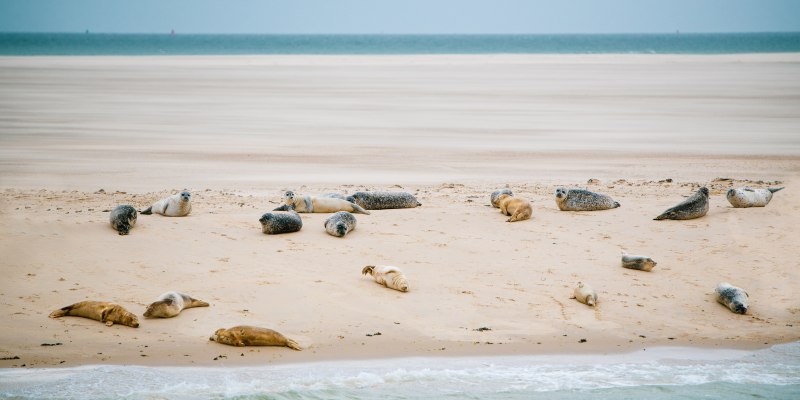
The Wadden Sea is the Netherlands’ only natural UNESCO site: a shared site with Denmark and Germany. According to UNESCO, it’s “the largest unbroken system of intertidal sand and mud flats in the world.” The sea is a transitional zone, meaning the transition between land, sea, and freshwater, and includes a wide variety of sea and land habitats for a huge number of species of birds, especially migratory waterbirds, and thousands of other species of animals and plants.
A number of our tours include travel on the Wadden Sea, some by motor-driven ships, some by sailing ships. Try Discover Friesland, the UNESCO treasures of Holland or our Premium Sail & Bike Wadden Sea tour
Ready to ride through history?
Embark on an unforgettable journey through the Netherlands’ most iconic UNESCO World Heritage Sites—by bike and boat! Let us take care of the details while you explore windmills, canals, historic towns, and coastal wonders at your own pace.
Speak to our travel experts today and start planning the adventure of a lifetime. Call us at+1-203-814-1249 or email us at info@boatbiketours.com.
Plan your trip