Discover our limited seasonal offers and travel Europe at its most beautiful
Find your tourSlowing down on two wheels: What Bart loves about life as a tour leader
Some people plan for years to find the perfect job. Bart found his almost by accident, through a conversation at an Amsterdam street market.
That chance meeting led him to Boat Bike Tours, where he started his first season as a tour leader. But once you hear him speak, it quickly becomes clear that this work suits him perfectly. Bart is the kind of person who seems genuinely happy to point things out to you: a quiet street in an old Dutch town, a swan in the reeds, a hidden cycling sign behind fresh spring leaves. He is calm, observant, practical, and easy company. The sort of tour leader who makes a group feel looked after without making a fuss about it.
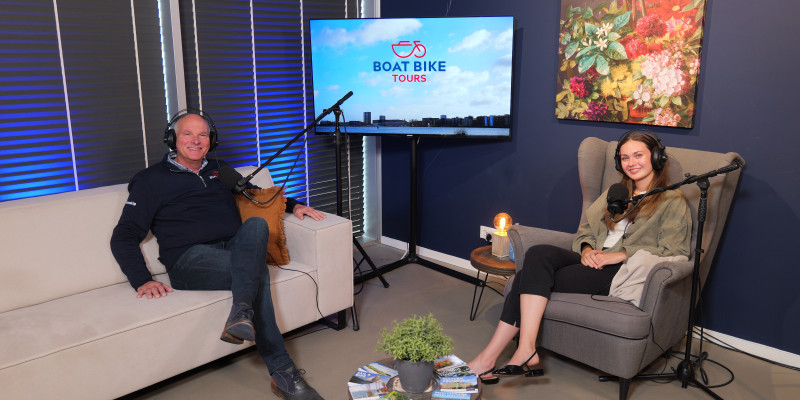
In our podcast conversation, Bart talks about what makes bike-and-boat tours so special, and why they help people travel differently.
A different pace from the start
Before joining Boat Bike Tours, Bart had never traveled in quite this way himself. Like many people, he knew the family version of active vacations: packing, unpacking, figuring out where to stay next, moving luggage from one place to another, and keeping children motivated through heat, hills, and long days.
He remembers cycling vacations in France with his wife and three daughters, when the girls were still young. Those trips created good memories, but they also came with the usual effort of family travel. That is one of the things he appreciates most about the bike-and-barge concept now.
Here, the boat does part of the work for you. You still get the pleasure of moving through a landscape by bike. You still arrive somewhere under your own steam. But at the end of the day, your room is there, your luggage is there, and dinner is taken care of. The logistics soften, and what remains is the pleasure of the journey itself.
Bart calls it a “floating hotel,” and there is something wonderfully simple in that phrase. It captures exactly why this style of travel appeals to so many people: it combines movement and comfort without asking guests to choose between them.
Slowly letting go
One of the most interesting things Bart shares is how guests change over the course of a trip.
The first day, he says, is usually the most intense. People are still finding their rhythm. They wonder whether they’ll be on time, whether they understand the route, whether they’re doing things right. They have practical questions. They’re still holding on to the habits of everyday life: planning, checking, rushing a little.
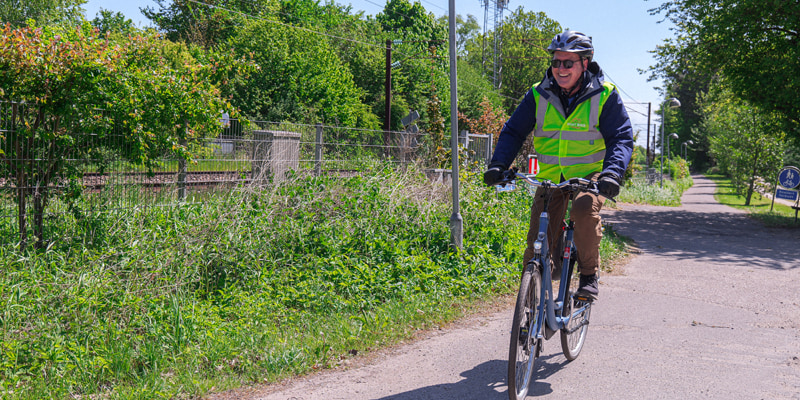
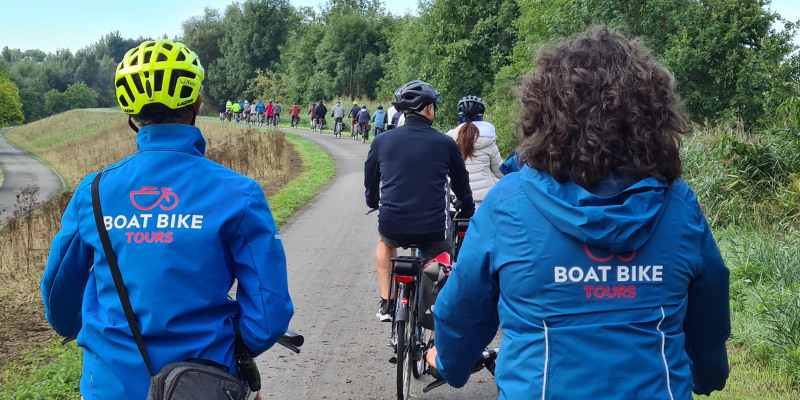
And then, slowly, they let go. Once guests understand how the trip works, how to follow the route, how much time they really have, and how the day will unfold, they start to relax into it. They stop thinking only about the next sight and begin paying attention to everything in between.
That is where the real pleasure begins.
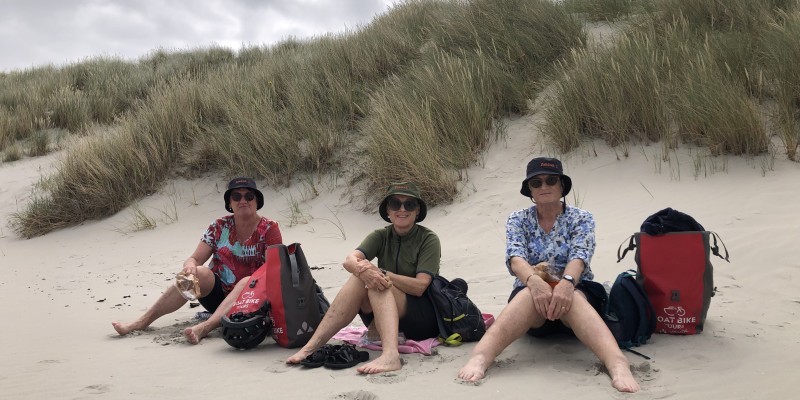
People linger over coffee. They sit on benches in the woods. They walk through small towns they had never heard of before. They park their bikes and wander for no particular reason. They discover that they do not need to hurry after all.
That, according to Bart, is the heart of slow travel: not simply moving more slowly, but becoming more available to what is around you.
Learning to see more
After living in the United States for more than a decade and then returning to the Netherlands, Bart noticed how proud he felt to show people his country. Not only Amsterdam, but also Utrecht, Delft, Leiden, Haarlem, and the smaller cities and regions that visitors might otherwise miss.
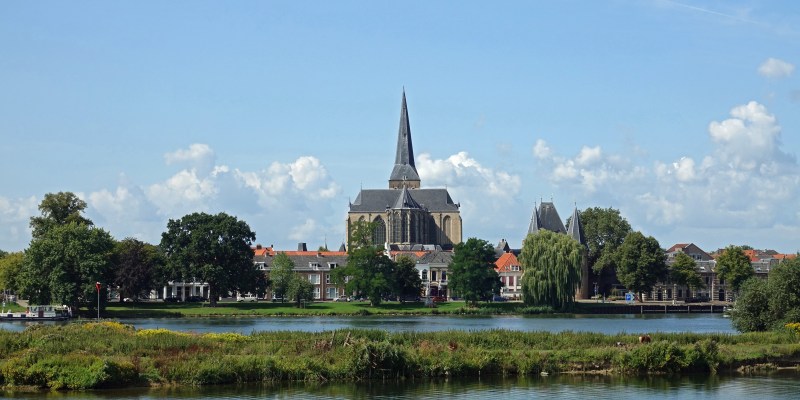
That pride now travels with him on tour. He talks about the old Hanseatic cities in the east of the Netherlands, with their quiet streets, preserved historic centers, and sidewalk cafes where people can stop for coffee or lunch. He describes places that feel different from Amsterdam: calmer, cleaner, less hurried, but no less interesting.
And then there is the countryside. One of the nicest things Bart says in the conversation is that leading tours has taught him to see things better. Following routes carefully, noticing small signs, and moving through nature at cycling speed has sharpened his eye. He sees more now: lambs in the fields, swans on the water, birds overhead, the small changes in a landscape that you miss when you rush through it.
It is a simple thought, but a lovely one. This kind of travel doesn’t just show you new places. It changes the way you notice them.
Strangers on day one, friends by day seven
Bart also has a front-row seat to one of the nicest parts of life on board: the way a group forms.
At the beginning of the week, guests don’t necessarily know one another. Some are traveling as couples, some with friends, some alone. There can be a little hesitation at first. A bit of waiting to see who sits where, who talks to whom, how the atmosphere will settle.
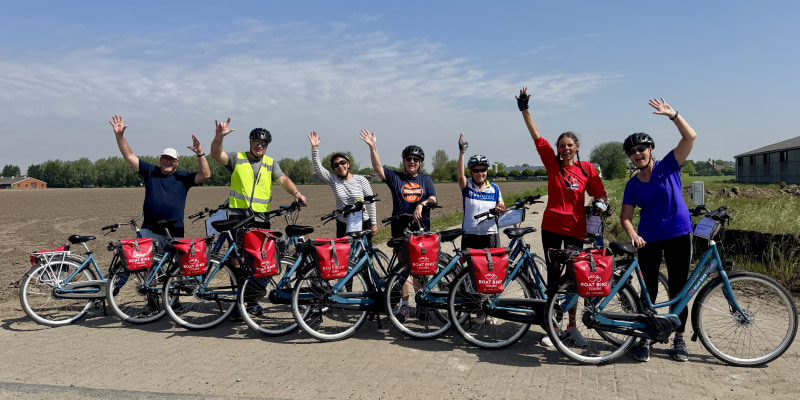
But shared days have a way of doing their work. People cycle together. They get lost and found again. They might stop at the same café. Back on board, they share tables, stories, weather, music nights, and the small routines of life on board. By the end of the trip, those once-strange faces have become familiar ones.
Bart has already collected some remarkable stories from his first season. Two couples from British Columbia ended up seated together, only to discover they lived just 200 yards apart back home and had never met before. Later, they sent him a postcard to say they had become close friends.
There were guests from Brazil tracing family roots in the Netherlands, a family reunion years in the making, and a group of German women enjoying a week away together. One of the German women turned out to have a spectacular singing voice and transformed an evening on board into something unforgettable.
These are not things you can stage. They happen because a trip creates space for them to happen.
A tour leader who keeps things light
What comes through most clearly in Bart’s way of speaking is his temperament. He doesn’t inflate the importance of his role. In fact, he’s quick to say that the success of a trip never depends on the tour leader alone. He points instead to the whole team: the captain and crew, the hospitality staff, the kitchen, housekeeping, the people behind the scenes who keep the experience running smoothly.
At the same time, it is obvious that a tour leader shapes the mood of the week. Bart does this in a way that feels reassuring rather than theatrical. If someone gets lost, he cycles back to find them. If there is an issue with a bike, he helps solve it. If someone doesn’t feel like cycling that day, the response is not pressure but conversation. And all of it, he says, should be done with a smile.
That line lands because it sounds like something he really means.
Travel that feels human
There are many ways to describe a Boat Bike Tours vacation: active, scenic, comfortable, well-organized. All of that is true. But Bart’s stories point to something else too. This style of travel feels human.
It gives people structure, but also freedom. While it brings them into nature, it doesn’t cut them off from comfort. It introduces them to places, but also to each other. And in the hands of someone like Bart, it feels less like being managed and more like being welcomed along.
Inspired to start your own adventure?
To plan your own bike and boat adventure, call us at (203) 814-1249. You can also send an email to info@boatbiketours.com, if you prefer. Either way, we’ll be happy to help. And don’t forget to subscribe to our newsletter to stay updated on our latest tours and special offers. We’d love to welcome you on board!
Questions or advice
Our Tour Advisors are here to assist you:
Monday to Friday
Amsterdam: 08:30 to 22:00
New York: 6:00AM to 7:00PM
NL: +31 (0) 20 72 35 400
USA: +1 203 814 1249
Secure payment
with Visa, Bancontact, American Express & Mastercard




Follow us for inspiration
About tours, cities and countries.
© 2026 Boat Bike Tours B.V. All information on this website is subject to change. Any typographical and/or graphical errors are unintentional but cannot be excluded; only your travel confirmation is legally binding. Our General Traveller Terms and Conditions for package tours apply to all trips, programs, offers and travel confirmations.
Boat Bike Tours B.V. does not participate in a dispute resolution procedure before a consumer arbitration board.
Texts and images: copyright owned by Boat Bike Tours B.V. Images: Intellectual property rights may be held by various organizations.
This website is owned and operated by Boat Bike Tours B.V. Our contact details (head office): Aambeeldstraat 20, 1021 KB Amsterdam, The Netherlands, info@boatbiketours.com, Chamber of Commerce number: 37147084, VAT number: NL8203.26.513.B01