


Many of our Boat Bike Tours include stops at UNESCO World Heritage sites along the way. Rachel, a self-described “UNESCO site geek” who works for us from time to time as a copy editor, wrote this blog post telling about her favorite ones:
Did you know there are a total of 1248 UNESCO World Heritage sites? They are either nature reserves, historical sites or “cultural landscapes.” They can be well-known or places you’ve never even heard of. A place makes the UNESCO list not because it’s a good place to visit, but because it has “outstanding universal value.”
Because I’m a UNESCO site geek, I’ve created a website about World Heritage Travel – I can honestly say that some are more worth visiting than others. Here is a list of my favorite ones that you can visit on a Boat Bike Tour, and I’ve added a few extras as well.
Plan your trip Discover all World Heritage tours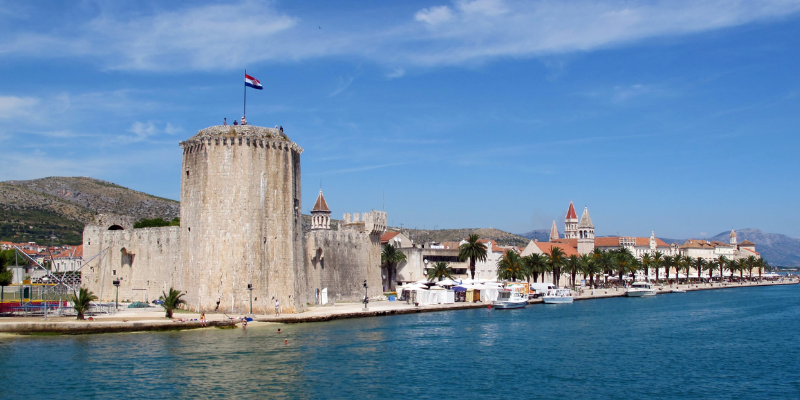
Croatia: Split
My favorite UNESCO site in Croatia is Split. I love it because of the astounding layering of history. The city grew around the Roman Diocletian’s Palace, dating to the 3rd-4th-centuries AD, along with other Roman structures. But when I say “grew around,” I really mean that the city, as it grew, incorporated itself into the palace. You’ll find Gothic, Baroque (and everything in between) within and also outside Diocletian’s Palace. Yet the Roman remains are still visible.
Dubrovnik and Trogir are tied for second place in Croatia. Dubrovnik is a picture-perfect late-medieval walled city, but with lots of Baroque elements since much of it was rebuilt after an earthquake in 1667. Trogir, like Dubrovnik, is an intact medieval city that grew according to an ancient Greek and Roman layout.
See Split and Trogir on the Multi-Adventure Family Tour or the Southern Dalmatia Tour.
See Split and Dubrovnik on the Pearls of Dalmatia Tour or the Highlights of Dalmatia Tour.
The Netherlands: Amsterdam
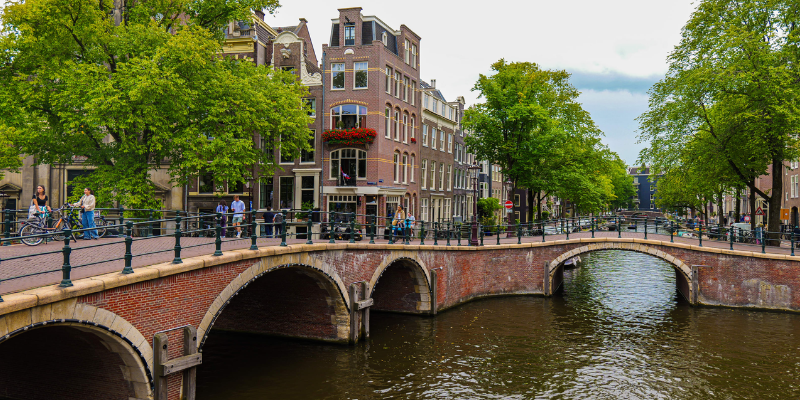
I may be biased, but my favorite World Heritage site in the Netherlands is Amsterdam. Designed in the 16th century and built in the 17th century, it was essentially created from scratch on swampland: a real achievement of urban planning. I admire the boldness of the vision: the canals and the entire urban layout in a series of concentric circles.
Today, Amsterdam is simply lovely: the rowhouses along the canals – some of them leaning rather alarmingly – the market squares, the little bridges over the canals. Yet it’s a vibrant, living city at the same time; watch out for bicycles whizzing past!
My second choice might surprise you. It’s not the very popular Kinderdijk windmills. I like Zaanse Schans better for seeing windmills, but Zaanse Schans isn’t a UNESCO site. My second choice is a tiny and quirky new UNESCO site: the Eisinga Planetarium. Here, an 18th-century wool worker built a working model of the solar system on his living room ceiling, and it still works today!
You can see Amsterdam on the UNESCO Treasures Tour, of course; the Amsterdam-Paris Tour; or the Amsterdam-Bruges Tour. Our tulip tours all start and end there too!
The Discover Friesland Tour and the Sail & Bike Wadden Sea Tour both will take you to Franeker, where the Eisinga Planetarium is located.
And Zaanse Schans, with its greater variety of windmills than Kinderdijk, is a stop on the tulip tours, the North Holland Landscapes and Seascapes, the Southern Tour of Holland and the Northern Tour of Holland.
Germany: Trier or the Rhine Valley
I can’t decide which of these two is my favorite UNESCO site in Germany, so let’s call it a tie.
Trier
When you think of Roman ruins, you probably think of Italy. But the Roman Empire expanded across Europe, and you can see some fascinating Roman structures in Trier, Germany, many dating from the period of Emperor Constantine in the 300s AD. The Porta Negra, a Roman gate, is the most striking, but Constantine also built two basilicas which are now two churches side by side. The city is dotted with Roman traces: remarkable mosaics in the Rheinisches Landesmuseum and the Dom Museum, three different sets of Roman bath ruins, a bridge that’s still in use, and more.
Upper Middle Rhine Valley
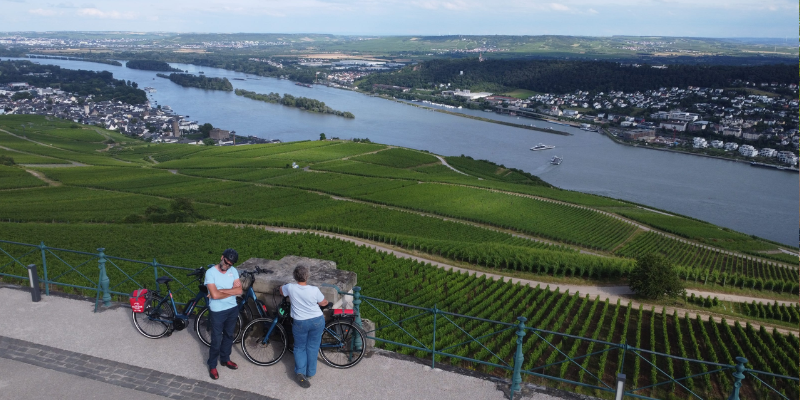
This section of the Rhine River is incredibly picturesque. It winds its way between forested hills, terraced vineyards, and towns filled with half-timbered houses along the riverside, with castles looming down from higher up: about 40 of them, if you count the ruined ones! Every turn of the river offers a new “wow moment.”
You’ll see Trier on the Cochem-Metz Tour or the Saarburg-Koblenz Tour.
You can float and cycle through the Upper Middle Rhine Valley on the Rhine and Moselle Tour or the Mainz-Cologne Tour.
Belgium and France: First World War sites on the Western Front
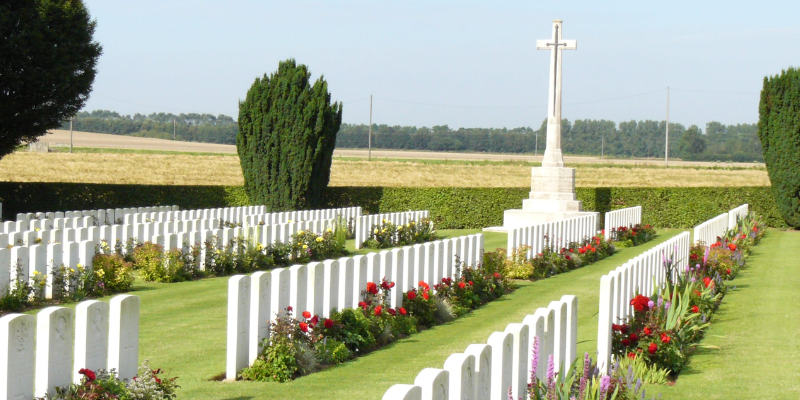
This UNESCO site, comprised of 139 locations in Belgium and France, is a sobering reminder of the disastrous war that engulfed this region. It’s a favorite for me because of its importance, but also because of the contrast you see as you travel here. It’s an agricultural landscape, with green fields, grazing cattle, and quiet farmhouses: very serene and peaceful. Yet this is where the worst of the battles happened, and the landscape is dotted with memorials and graveyards for the fallen soldiers who got caught up in it. It makes you think.
The cemeteries are generally grouped by nationality: Canadian, British, French, German, and so on. They’re well cared for and I found the ones I visited to be very moving, with their neat rows of crosses.
Even if you don’t stop and visit a cemetery, you’ll notice, in even the smallest town, at least one monument. Often it’s in the shape of a large slab or an obelisk with names inscribed on it of that town’s fallen soldiers. No town escaped the heartbreak.
On the Bruges-Paris Tour, you’ll cycle through the Somme Valley, where the Battle of the Somme took place.
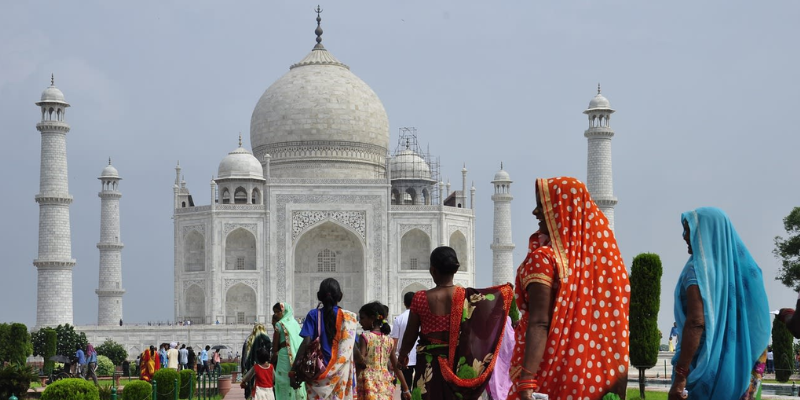
India: The Taj Mahal and many more
I visited India with my husband, not on the new Boat Bike Tour, but that tour looks fantastic and includes quite a few UNESCO sites. The obvious favorite is the Taj Mahal in Agra, but there are others I loved as well.
The Taj Mahal is a mid-17th-century mausoleum built by Mughal emperor Shah Jahan to house his wife’s tomb.
When I first visited it just last year, I was not even sure I wanted to see it. It’s famously crowded, and I’d seen a million photos of it. Why bother?
But my husband insisted, so I went along, and I have to admit, he was right! Even though you think you know what to expect, it’s an amazing experience when you first see that shining white building framed in the archway as you enter. Just astounding.
My second favorite place was Fatehpur Sikri, not far from Agra. This fortified palace and mosque complex dates to the 16th century, but was abandoned just a couple of decades later. I won’t go into the story of Emperor Akbar, why he ordered its construction and how he oddly combined incredible brutality with toleration of religious expression. Ask your tour leader!
The residential part of the palace housed Akbar’s three main wives and the whole royal court, and the buildings show a variety of architectural and religious influences in their ornate details. The huge mosque complex is equally ornate, and still in use as a mosque today.
I feel like I should give an honorable mention to Keoladeo National Park, which is between Jaipur and Agra. I didn’t visit this one, but my husband did, and he termed it “a bird lover’s heaven.” So if you are a birdwatcher, make sure to spend some time here. It’s a wetlands nature reserve for several endangered or threatened species, and a flyover spot for migrating birds too.
You can visit the Taj Mahal, Fatehpur Sikri, and Keoladeo, plus several other UNESCO sites on the Colors of India tour.
If any of these spark your interest, give us a call at (203) 814-1249 or email us at info@boatbiketours.com! We’ll be happy to answer any questions you have or help you choose the right tour for you. And make sure to subscribe to our newsletter, it’ll keep you up to date on things like new routes and the latest offers!
Plan your trip